You’ve been contacted by the AMF? You’ve come to the right place!

As part of its public protection mandate, the AMF seeks to detect, disrupt and prevent certain fraudulent activities likely to impact investors. As such, the AMF is involved in initiatives intended to disrupt and prevent crypto fraud in Canada and around the world.
In partnership with a number of crypto trading platforms, these operations aim to inform identified victims, support them, attempt to recover their cryptoassets, and prevent further harm.
Through these efforts, as well as by raising awareness about the dangers of crypto fraud, we can not only protect investors but also create a safer environment for everyone
Why did the AMF contact me?
In an effort to support efforts to protect investors and recover cryptoassets for victims of crypto fraud, the AMF investigations team may proactively call or e-mail individuals who have suffered losses or might have information that is relevant to an investigation.
What is crypto fraud?
Crypto fraud is where fraudsters, taking advantage of crypto’s growing appeal, separate you from your money by promising quick, high returns. They ultimately vanish, but only after attempting to extract ever-increasing amounts from you, leaving you with significant losses. They often use well-thought-out tactics and lures, such as flashy ads on social media, romance scams, deepfakes, fraudulent investment sites or approval phishing.
What is approval phishing?
Approval phishing, often referred to as “pig butchering,” is where fraudsters get victims to give them access to their crypto wallet under false pretences and sometimes without their realizing it. Instead of requesting a password, fraudsters use deception to take over control of the wallet and thus the ability to empty it of crypto.
The fraudsters involved in the scam create fake requests to “approve” access to your wallet. If you click on “approve”, a link or a “button” on the fraudulent site, you may unknowingly hand over control of your crypto wallet to a fraudster. Although the fake requests appear to come from trusted sources and closely mimic legitimate apps and institutions, making them look authentic, they actually come from fake websites, fake apps or pop-ups and are delivered to you through compromised links or e-mails.
What to do if you fall victim to fraud?
Anyone can be a victim of fraud, so don’t beat yourself up. Scams often rely on promises of exceptional returns, using misconceptions about or the excitement surrounding new technologies to manipulate investors.
If you believe you have unknowingly granted access to your crypto wallet, act quickly!
There are several ways you can do this, including by:
- Revoking any approval or consent you have knowingly or unknowingly given to individuals or companies to access your crypto wallets. You can review and revoke granted approvals using Etherscan's
 This link will open in a new window token approval checker:
- Select “Connect to Web3” and connect your crypto wallet
- Locate and review existing token approvals
- Click on “Revoke” to cancel any unauthorized approvals. A small fee may apply to revoke token approvals
- If you hold an account with a crypto trading platform registered with the AMF, transferring the crypto from the compromised wallet to the registered platform.
- Creating a new wallet and transferring the remaining crypto to it to avoid further losses.
Other tools may be used to revoke token approvals, depending on the type of wallet you have, including those available on the website revoke.cash This link will open in a new window.
- Beware of collection services that promise to recover lost funds or crypto for a fee. These services are sometimes fraudulent.
- Buy and sell crypto using trading platforms registered in Québec. Check the AMF’s register.
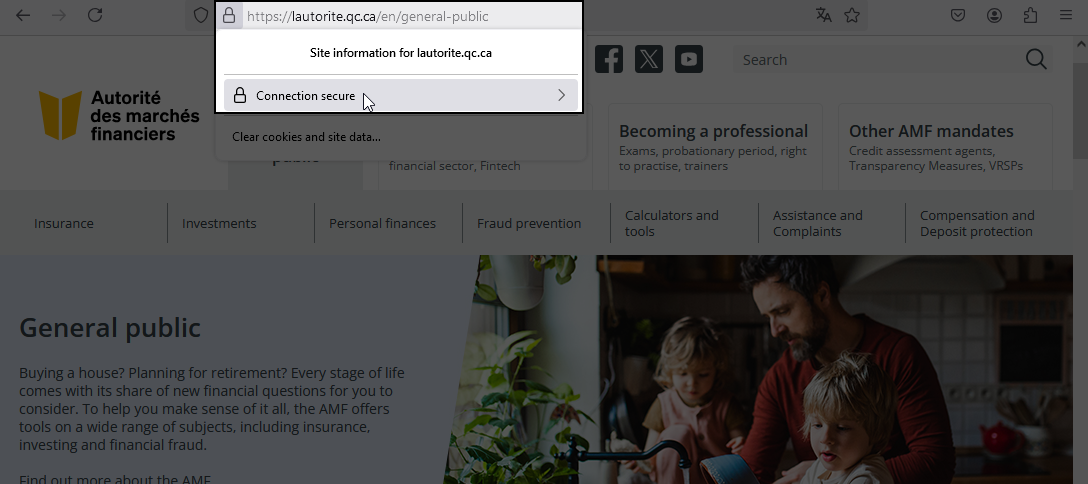
- Carefully check the URL or application you use to access crypto services because phishing sites can look almost identical to legitimate ones. Check the website’s URL: If the site’s legitimate, it will usually start with “https”, indicating that the connection is secure.
- See the page You're a victim of fraud? for more information.
- If you have any doubts or questions, contact our Information Centre.
- To learn more about the efforts made as part of Operation Avalanche in the spring of 2025, see the news release This link will open in a new window.